Semarang, July 2026 – The Master’s Program in Epidemiology, Faculty of Public Health, Universitas Diponegoro (FKM UNDIP), further strengthened its international collaboration through an Adjunct Professor and Postdoctoral Researcher program aimed at enhancing laboratory capacity, together with Prof. Han Jin-Hee and Dr. Lee Wang-Jong from the Department of Tropical Medicine, Kangwon National University, South Korea. Held from July 17–28, 2026, the activities included academic discussions, public lectures, laboratory training, and the strengthening of research collaboration in the fields of tropical diseases and malaria.
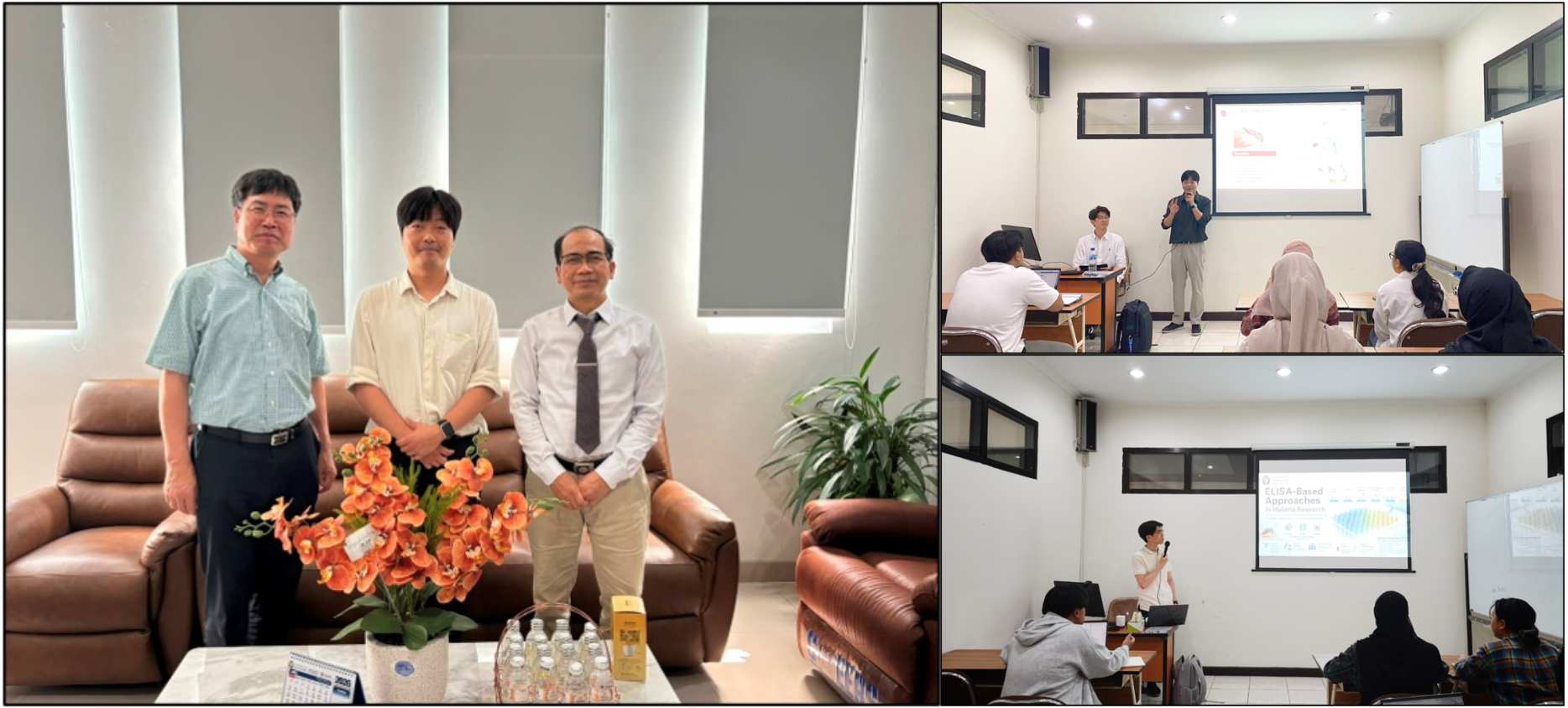
The series of activities began on July 17, 2026, with a welcoming session hosted by the Dean and the leadership team of the Faculty of Public Health, Universitas Diponegoro, followed by an academic discussion with members of the Public Health Genomics Laboratory. The discussion served as a platform for exchanging knowledge and research experiences in the fields of molecular epidemiology, tropical diseases, and public health.
On July 20, 2026, Prof. Han Jin-Hee and Dr. Lee Wang-Jong delivered a public lecture on the application of Enzyme-Linked Immunosorbent Assay (ELISA) in malaria research and surveillance. The lecture covered the basic principles of ELISA, method development, and its applications in detecting malaria antigens and antibodies to support epidemiological research and disease control. Furthermore, on July 21, 2026, a discussion was held to strengthen collaboration under the Three Pillars of Higher Education (Tri Dharma Perguruan Tinggi), involving the leadership of Universitas Diponegoro, the leadership of FKM UNDIP, as well as representatives from Kangwon National University and Yonsei University. The meeting discussed opportunities for collaboration in education, research, and community service as an effort to strengthen a sustainable academic partnership between the institutions.
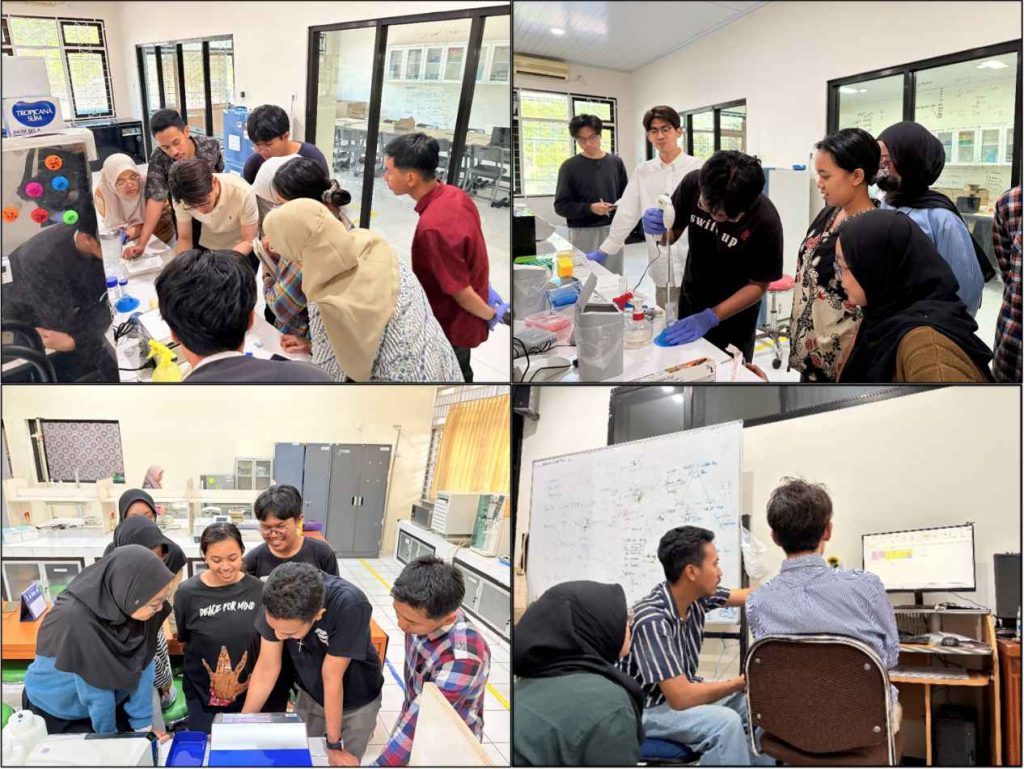
The activities continued with hands-on ELISA training at the Biomolecular Laboratory of FKM UNDIP on July 21–24 and July 28, 2026. The training was attended by undergraduate and master’s students in Epidemiology, who gained direct practical experience in various stages of ELISA testing, including sample preparation, incubation, washing, reagent addition, and result interpretation. Through this activity, participants gained not only theoretical understanding but also essential laboratory skills to support research in biomolecular science and tropical diseases.
An important outcome of this collaboration is the publication of several international scientific articles in reputable Q1–Q2 journals, resulting from collaboration among the Master’s Program in Epidemiology, Kangwon National University, and Yonsei University. These publications serve as tangible evidence of the contribution of international collaboration to advancing research on malaria and tropical diseases in Indonesia. Through this series of activities, the Master’s Program in Epidemiology continues to demonstrate its commitment to strengthening global academic networks, enhancing human resource capacity, and promoting impactful research that contributes to public health.